
 by
by 
As we navigate the mid-point of the 2020s, the Australian property sector is demonstrating a maturation defined by resilience, demographic reality, and technological integration. The market has fully absorbed the post-pandemic corrections and interest rate adjustments, settling into a new phase of nuanced growth. For buyers, sellers, and investors, success in 2026 will hinge on understanding and adapting to the key structural trends now firmly reshaping the landscape.
Here are the dominant forces defining the Australian real estate marketplace in 2026.
1. The Age of Strategic Master Planning and the 20-Minute Neighbourhood
The concept of the “dream home” has evolved beyond the dwelling itself to encompass the entire lived environment. In 2026, premium value is increasingly attached to properties within purpose-built, master-planned communities that deliver on the “20-minute neighbourhood” principle. These are suburbs or precincts where residents can meet most of their daily needs—work, education, shopping, healthcare, and leisure—within a 20-minute walk, cycle, or public transport ride from home.
- Impact: Developments that integrate green spaces, local retail hubs, co-working facilities, and essential services from the outset are outperforming those that are purely residential. This trend is driving demand in both new suburban growth corridors and in the thoughtful densification of established inner-ring suburbs.
2. The Carbon-Neutral Premium and Mandatory Disclosures
Sustainability has moved from a selling point to a fundamental valuation metric. With several states now implementing or proposing mandatory climate risk and energy efficiency disclosures for property sales, a building’s environmental performance is directly influencing its market price.
- Impact: In 2026, we see a clear “green premium” for homes with high NatHERS ratings (8 stars and above), electrified appliances, solar-plus-battery systems, and water-positive features. Conversely, older, energy-inefficient properties face a growing “brown discount,” as buyers factor in the substantial cost and regulatory hassle of retrofitting. For investors, these assets also carry heightened “stranded asset” risk.
3. The Institutionalisation of the Rental Sector
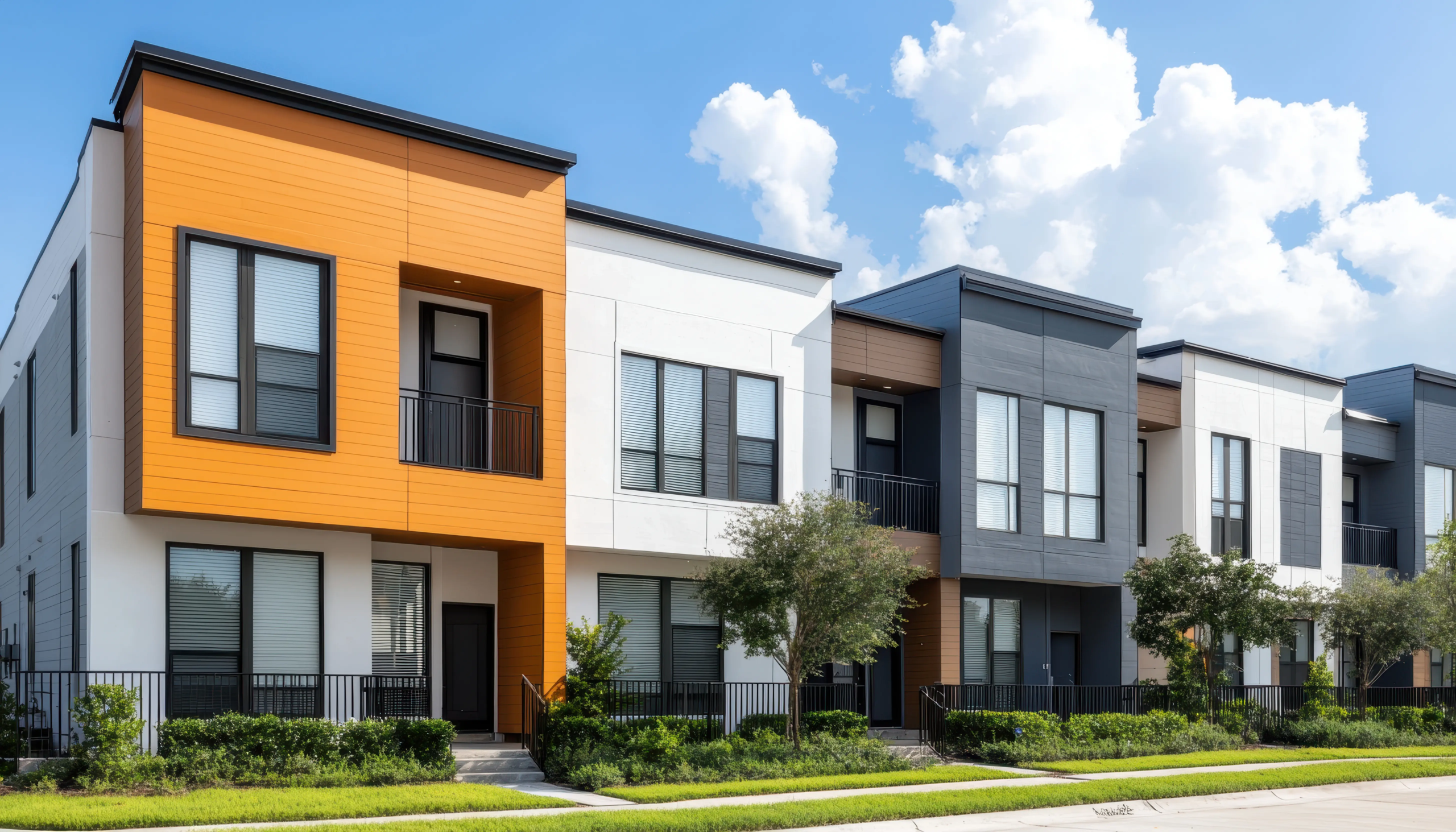
The Build-to-Rent (BTR) model has moved from an emerging niche to a mainstream pillar of the housing sector. In 2026, institutional-grade BTR developments in major cities offer a professionally managed, amenity-rich alternative to the traditional private rental market.
- Impact: This provides long-term security and quality for tenants. For the market, it introduces a new, stabilising asset class for large-scale investment, potentially easing rental volatility in specific precincts. It also raises the bar for private landlords, who must now compete on service, quality, and certainty, not just location.
4. The Rise of the Adaptive, “Hybrid-Ready” Home
The legacy of flexible work is permanent. In 2026, demand is strongest for homes explicitly designed to support hybrid lifestyles. Key features include:
- A dedicated, sound-insulated study nook or second living space that can function as a productive home office.
- Multi-generational flexibility, with self-contained suites or adaptable ground-floor spaces.
- Superior connectivity, with fibre-to-the-premises (FTTP) and home-wide mesh networking being standard buyer expectations.

5. Precision Investment Through AI-Powered Analytics
The intuition-led property investment is giving way to a data-driven approach. In 2026, sophisticated investors and advisors leverage AI analytics platforms that process hyper-local data—from local council infrastructure pipelines and school catchment changes to micro-climate risk and demographic shifts—to identify suburbs and even specific streets with the highest probability of outperformance.
- Impact: This leads to more targeted investment, reducing speculative “hot spot” chasing and focusing capital on areas with verifiable, long-term growth drivers. It democratises high-level market analysis but also increases competition for genuinely underpriced opportunities.
6. A More Nuanced Regional Rebalancing
The great regional migration of the early 2020s has settled into a more selective pattern. While some tree- and sea-change markets have normalised, a cohort of “regional capitals”—cities like Geelong, Newcastle, the Sunshine Coast, and Toowoomba—continue to exhibit robust growth. Their success is underpinned by diversified local economies, major infrastructure investment, and university presence, offering a genuine alternative to capital city living without sacrificing amenity or employment prospects.

A Market of Differentiation
The Australian real estate market of 2026 is characterised by increasing differentiation. It is no longer a uniform market that rises and falls in sync. Value growth is increasingly tied to a property’s alignment with these macro-trends: its sustainability, its community context, its adaptability, and its data-supported fundamentals.
For participants, this demands a more informed, strategic approach. Success will belong to those who look beyond short-term price movements and invest in the intrinsic, future-proof qualities that define the next era of Australian property.
Buying property is a significant step, but it doesn’t have to be complicated. With the right preparation and support, you can navigate the Australian real estate marketplace with clarity and confidence.
Disclaimer
The content published on this blog is provided by New Squares for general information purposes only. Although every effort is made to ensure the accuracy, currency, and reliability of the information at the time of publication, New Squares makes no representations or warranties, express or implied, regarding the completeness, accuracy, suitability, or availability of any information contained herein. All content is subject to change without notice. Nothing in this blog constitutes financial, legal, investment, or professional advice. Readers must not rely solely on the information provided and should obtain independent professional advice before making any property, investment, or financial decisions. To the fullest extent permitted by law, New Squares, its directors, employees, agents, and contributors disclaim all liability for any loss, damage, or consequences arising from the use of, or reliance on, any information contained in this blog. New Squares does not accept responsibility for the content, accuracy, or availability of any external websites linked within this blog, and inclusion of such links does not imply endorsement. By accessing this blog, you acknowledge and agree to these terms.



Join The Discussion