
 by
by 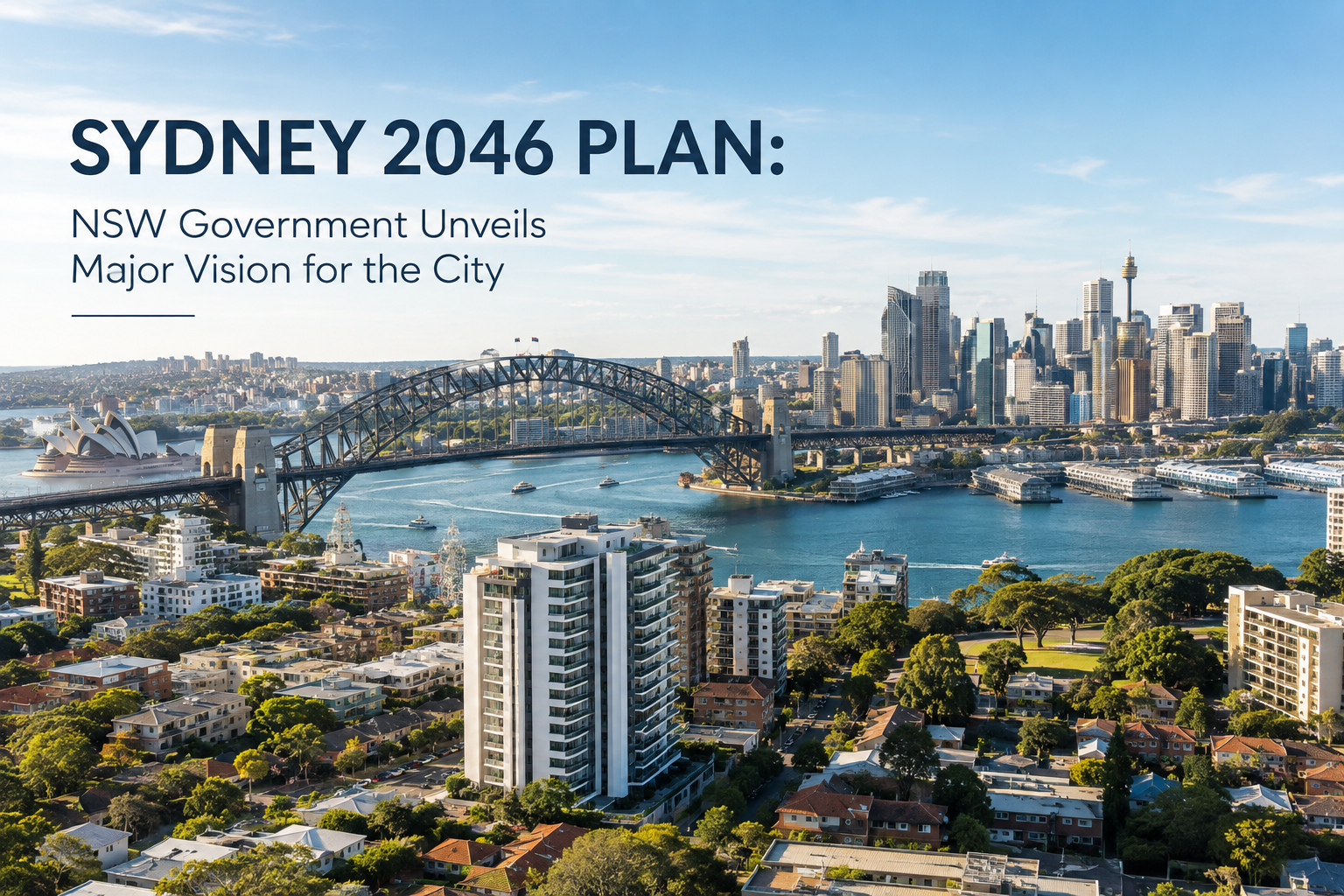
Sydney is on the cusp of its most significant planning transformation in decades. The Sydney 2046 Plan: NSW Government Unveils Major Vision for the City sets out a sweeping 20-year blueprint designed to accommodate an additional 1.3 million residents, deliver hundreds of thousands of new homes, and reshape how the city grows, works and moves. For anyone with an interest in Sydney’s property market, whether as a homeowner, investor or industry observer, this plan represents a defining moment that will influence suburbs, infrastructure and lifestyle outcomes for a generation.
What Is the Sydney 2046 Plan?
The Sydney 2046 Plan is a strategic land use framework finalised by the Minns Labor Government, replacing the previous Greater Sydney Region Plan and its associated district plans with a single, unified strategy. Covering 33 local government areas across the metropolitan region, the plan is intended to guide councils, government agencies and industry as they prepare for Sydney’s population to swell from roughly 5.3 million people today to around 6.6 million by 2046.
Rather than treating housing, employment and infrastructure as separate concerns, the plan brings these elements together for the first time. Planning Minister Paul Scully has been candid about the rationale, noting that growth has historically been left to chance, with housing, jobs and services planned in isolation and communities often left to manage the consequences. The Sydney 2046 Plan is designed to change that by coordinating decisions across the whole of Greater Sydney.
The Scale of Sydney’s Growth Challenge
To keep pace with demand, the plan estimates that Sydney will require at least 800,000 additional homes and around 950,000 new jobs over the coming two decades. These are not modest targets, and they reflect the scale of the challenge facing planners as the city continues to attract new residents through both interstate and overseas migration.
Notably, job targets have been broken down by individual local government area for the first time, giving every council and community a clearer stake in the region’s future growth. This granular approach is intended to ensure that economic opportunity is distributed more evenly across the city, rather than being concentrated solely in the traditional CBD and inner-ring suburbs.
Rebalancing East and West
One of the most talked-about features of the Sydney 2046 Plan is its ambition to rebalance growth between the city’s east and west. Under the framework, eastern Sydney is expected to absorb the majority of new housing, with a focus on diverse building types, including apartments and townhouses, concentrated near existing transport hubs and community infrastructure. The government’s reasoning is that established infrastructure in the east already has the capacity to support higher-density living, making it more efficient to build upwards rather than continuing to expand outward into greenfield land.
Western Sydney, meanwhile, is positioned to become the region’s primary economic and industrial growth engine. This shift is underpinned by major catalysts such as the Western Sydney International Airport and the surrounding Aerotropolis, alongside investment in advanced industries, logistics and innovation precincts. The intention is to create a genuine employment hub in the west, reducing the need for long commutes and helping to balance where people live against where they work.
Infrastructure and Liveability at the Core
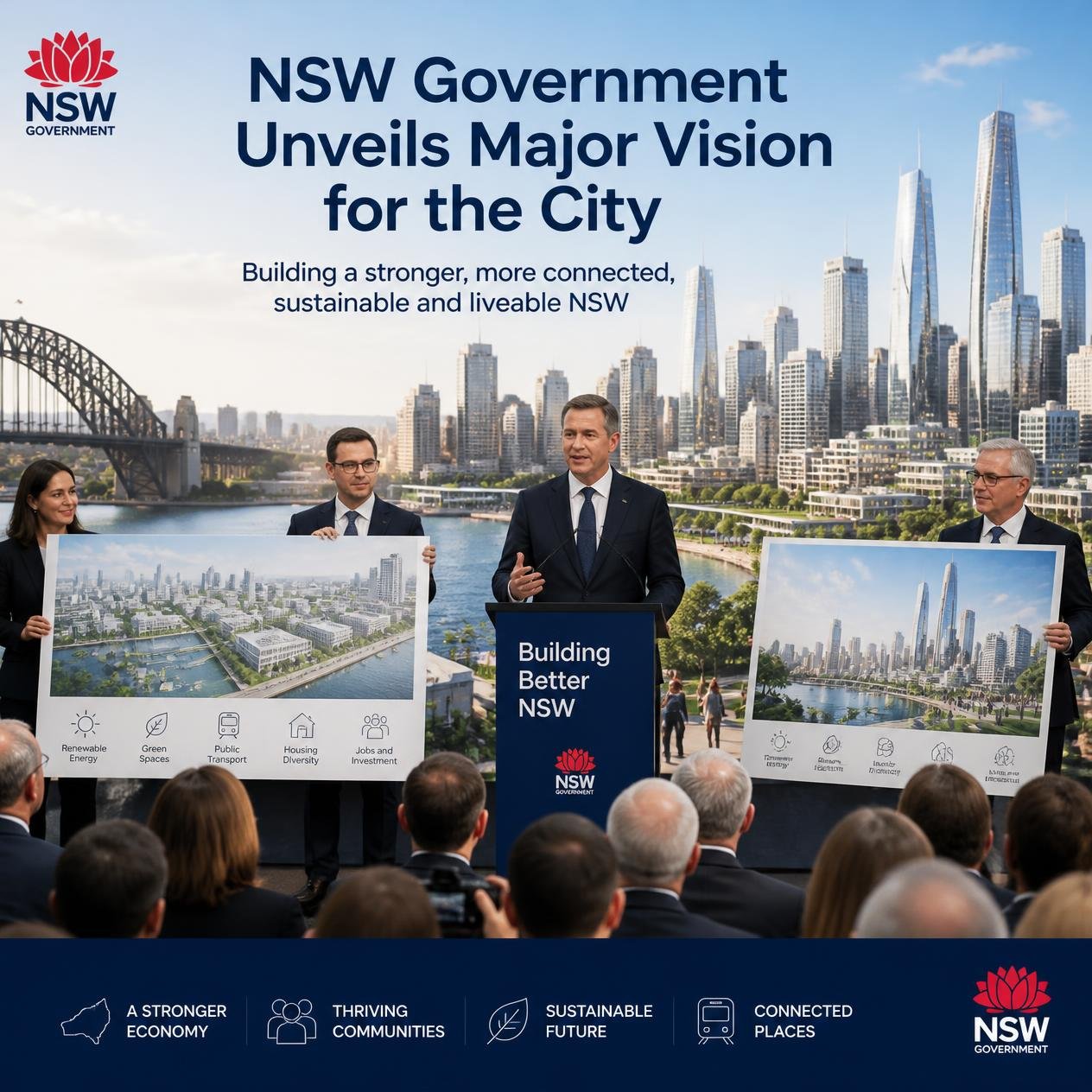
Growth under the Sydney 2046 Plan is not intended to happen in isolation from the amenities that make a city liveable. The plan identifies priority Blue-Green Grid corridors, a network aimed at improving access to parks, waterways and open space across the region, with the first three corridors scheduled for delivery within the next three years. This reflects a broader recognition that as density increases, so too must investment in green space, community facilities and public realm improvements.
The plan also sits alongside the state’s first State Land Use Plan, which applies seven overarching priorities, including housing, prosperity, connectivity, resilience and liveability, as a framework for both state and local decision-making. Together, these documents are intended to give councils a consistent set of principles to apply when assessing development and infrastructure proposals.
What This Means for Transport and Connectivity
Transport connectivity remains central to the success of the Sydney 2046 Plan. By concentrating new housing around existing transport hubs, the government aims to reduce reliance on private vehicles and support more sustainable travel patterns. Suburbs with strong public transport links stand to benefit from increased development interest, whilst the ongoing expansion of infrastructure around Western Sydney International Airport is expected to unlock new connectivity options for residents and businesses in the growth corridors of the city’s west.
For prospective buyers and investors, this emphasis on transport-oriented development is a useful signal. Locations earmarked for growth under the plan are likely to see improved access to rail, bus and metro services over time, which historically correlates with stronger long-term demand for both residential and commercial property.
Industry and Community Response
The Sydney 2046 Plan has drawn a broadly positive response from industry bodies, though not without caveats. The Committee for Sydney has welcomed the long-term vision, describing it as a plan that finally tells a coherent story about where jobs, housing and infrastructure will be delivered. The Urban Development Institute of Australia has also voiced support, while stressing that the plan’s ultimate success will depend on execution. Delivering serviced land, ensuring project feasibility and coordinating infrastructure rollout will be the true test of whether the vision translates into tangible outcomes on the ground.
More than 2,000 public submissions were received during the exhibition of the draft plan in late 2025, and this feedback has shaped the final document, sharpening direction on where and what types of homes should be built across the region.
Implications for Sydney’s Property Market
For those following the Sydney property market, the 2046 Plan offers a rare degree of long-term clarity. Suburbs positioned to receive concentrated housing investment, particularly in the eastern and inner-ring areas well served by transport, are likely to see continued interest from developers and buyers seeking access to established infrastructure. Meanwhile, western growth corridors tied to employment precincts and the new airport are set to benefit from sustained economic momentum, which typically supports demand for housing, services and amenities in the surrounding area.
Councils will also be required to lock in feasible housing capacity within their local planning schemes, with five-year housing targets to be set collaboratively between the state and individual councils once the National Housing Accord concludes in 2029. This provides a clearer, more predictable pipeline for future development activity across Greater Sydney.
Looking Ahead
The Sydney 2046 Plan: NSW Government Unveils Major Vision for the City marks a genuine shift in how Sydney’s growth will be managed over the coming two decades. By coordinating housing, employment and infrastructure under a single strategic framework, and by rebalancing growth between east and west, the plan aims to deliver a more liveable, connected and economically resilient city.
Whether you are considering a move, exploring investment opportunities, or simply keen to understand how your local area may change, the Sydney 2046 Plan is well worth watching closely in the years ahead. As implementation progresses and local housing targets are finalised, further detail will emerge on exactly how individual suburbs and regions will be shaped by this ambitious vision for Sydney’s future.
Buying property is a significant step, but it doesn’t have to be complicated. With the right preparation and support, you can navigate the Australian real estate marketplace with clarity and confidence.
Disclaimer
The content published on this blog is provided by New Squares for general information purposes only. Although every effort is made to ensure the accuracy, currency, and reliability of the information at the time of publication, New Squares makes no representations or warranties, express or implied, regarding the completeness, accuracy, suitability, or availability of any information contained herein. All content is subject to change without notice. Nothing in this blog constitutes financial, legal, investment, or professional advice. Readers must not rely solely on the information provided and should obtain independent professional advice before making any property, investment, or financial decisions. To the fullest extent permitted by law, New Squares, its directors, employees, agents, and contributors disclaim all liability for any loss, damage, or consequences arising from the use of, or reliance on, any information contained in this blog. New Squares does not accept responsibility for the content, accuracy, or availability of any external websites linked within this blog, and inclusion of such links does not imply endorsement. By accessing this blog, you acknowledge and agree to these terms.
Join The Discussion